How AI Is Changing Recall for Every Appointment-Based Business
Whether you're a dentist, a colourist, a chiropractor, or a med spa performing $1,800 Botox treatments, every appointment-based business has the same hidden revenue leak.
It doesn't matter if you're a dentist, a colourist, a chiropractor, or a med spa performing $1,800 Botox treatments—if your business runs on booked time slots, you have the exact same problem.
A portion of your client list is overdue, half-forgotten, and sitting quietly inside your system doing absolutely nothing for your revenue.
AI didn't invent this problem.
It simply became the first technology capable of solving it at scale.
Every Appointment Business Has the Same Hole in the Bucket
Swap the word patient for client, member, or customer, and the story is almost identical across every appointment-based business.
The average general dentist keeps only four out of ten patients beyond their first visit, according to the Journal of the American Dental Association. Salons and spas commonly experience lapse and no-show rates between 15% and 30%. Med spas, where a single missed appointment can represent an $800 laser session or a $4,000 body-contouring package, regularly report no-show rates approaching 20%. Across U.S. healthcare, missed appointments are estimated to cost more than $100 billion annually.
None of these are acquisition problems.
These are people who already chose you once.
They trusted your business enough to book an appointment.
Then your systems quietly allowed them to disappear—not because your team didn't care, but because chasing hundreds of overdue clients one by one was never a realistic responsibility for a busy front desk.
Reminders Were Never the Fix—They Just Felt Like One
Here's the uncomfortable truth.
Most "recall systems" businesses have relied on for years aren't actually recall systems.
They're appointment reminders with a longer delay.
A date threshold passes.
A text goes out.
Maybe another follows two weeks later.
That's not recall.
That's a countdown timer wearing a nametag.
The numbers reflect the difference.
Generic postcards typically convert at only 2–5%.
Mass text reminders generally perform around 8–12%.
Appointments that are already scheduled experience significantly lower no-show rates than clients who must first be convinced to book again.
The gap isn't whether someone received a message.
The gap is whether someone actually helped them commit to another appointment.
What Changes When AI Does the Chasing
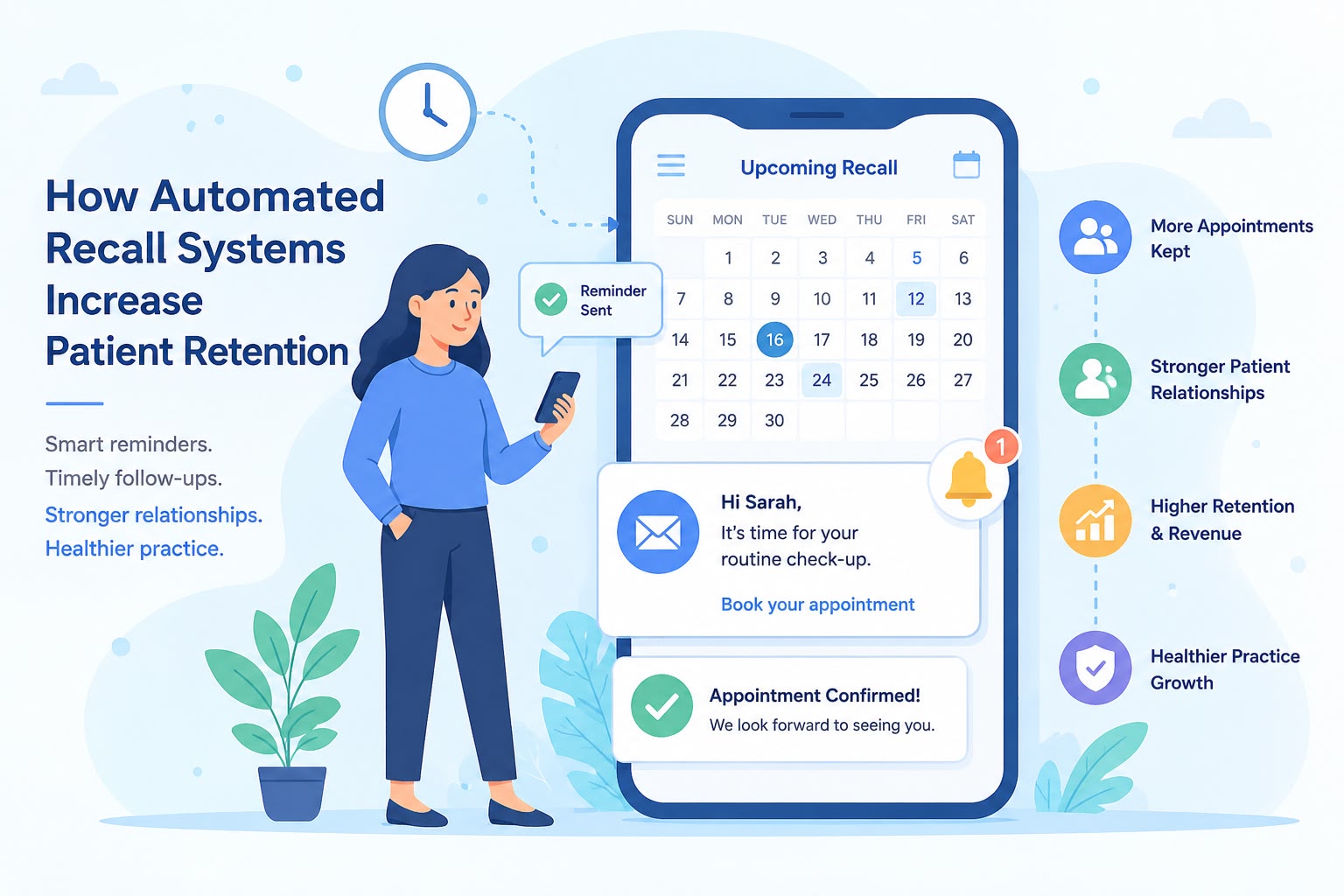
AI-powered recall doesn't simply send a nicer reminder.
It starts a conversation.
Whether through SMS, email, or voice, AI can respond to questions, handle back-and-forth scheduling, understand requests like "Can I come after 6 PM?", suggest alternatives, and book appointments directly into your calendar—all without staff intervention.
That's a fundamentally different process than sending scheduled reminder blasts.
And the results reflect that.
Practices using AI-driven recall have reported dramatically higher engagement than traditional reminder systems. Multi-touch reminder sequences consistently outperform single reminder messages, while conversational follow-up has been shown to reduce missed appointments and reactivate clients who would otherwise have quietly disappeared.
Even relatively small improvements in attendance compound quickly across an entire year of bookings.
What looks like a modest increase in rebooking rates often becomes a substantial increase in annual revenue.
Why This Matters Even More as Appointment Value Increases
The higher your average appointment value, the more expensive every missed recall becomes.
A salon losing an $85 haircut certainly hurts.
A med spa losing a $1,500 treatment because someone simply forgot to book again is a very different problem.
A dental practice carrying hundreds of thousands of dollars in unscheduled treatment plans isn't dealing with a scheduling issue.
It's looking at revenue that's already been earned—but never realized.
Regardless of your industry, the economics remain remarkably consistent.
Reactivating an existing client costs only a fraction of acquiring a completely new one through advertising.
Every appointment-based business already owns one of its greatest growth opportunities.
Most simply mistake recall for reminders and never fully unlock it.
The Bottom Line
If your current recall strategy consists of a text message that fires automatically and hopes someone books, you don't have a recall system.
You have automation with good intentions.
AI-driven recall behaves differently.
It follows up.
It continues the conversation.
It adapts to the client's preferred communication channel.
Most importantly, it works toward completing the booking instead of merely announcing that one should happen.
Whatever chair, treatment room, consultation room, or table your business depends on, the client database you already own is almost certainly more valuable than the one you're still paying to build.
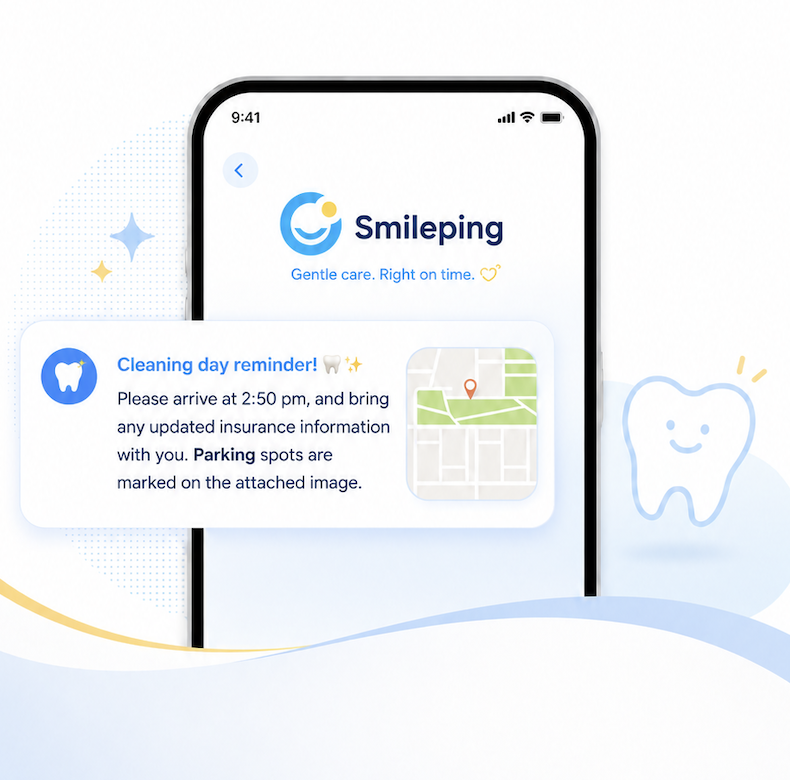
That's precisely why platforms like SmilePing focus on intelligent recall—not simply sending reminders, but helping appointment-based businesses reconnect with overdue clients, recover lost revenue, and build stronger long-term relationships through AI-powered conversations.