How to Be Dangerously Good at Customer Follow-Ups
Most businesses don't lose customers to competitors. They lose them to silence.
Here is an uncomfortable number: on average, it takes close to five touchpoints just to get a response from someone, and that can be true even for people who have already shown interest.
Not five touchpoints to close the booking. Five just to get a reply.
Now here is the number that should really bother you: nearly half of all follow-up sequences stop after one attempt. One message, one call, or one text is sent, and then nothing. The business moves on, assumes the person was not interested, and quietly writes off the revenue.
The customer may not have been uninterested. They may simply have been busy.
There is a difference, and it could be costing your business money.
The Math Nobody Wants to Do
Research on cold outreach and sales conversations keeps landing on the same uncomfortable pattern: many eventual “yeses” only arrive after multiple objections or several unanswered messages.
Roughly six out of ten people say no several times before they finally say yes. Yet many businesses give up around attempt three or four, often just before the conversion might have happened.
Put those two facts together and you get the real story behind a large amount of lost revenue.
It is not always that people do not want what you are offering. Sometimes, the business simply stopped talking to them one message before they were ready to listen.
This is not unique to sales teams cold-calling strangers. It applies just as much to a dental clinic trying to bring a patient back for their cleaning, a salon trying to fill Tuesday's empty appointment, or a spa reminding someone that their package is about to expire.
Anywhere a business depends on a customer taking a second action—replying, booking, confirming, rescheduling, or showing up—the same pattern plays out.
Why “Dangerously Good” Is Not the Same as “Annoying”
There is a fine line between persistence and pressure, and it is worth being precise about it because too much persistence can quickly backfire.
Daily messages can feel more like desperation than care. But leaving several weeks of silence between each message can also make the follow-up ineffective.
The better approach is to create a thoughtful rhythm.
Follow-ups should be spaced far enough apart that they do not overwhelm the customer, but close enough together that the original conversation, service, or booking need is still relevant.
Businesses that get labelled “pushy” are often the ones with no real system. They begin with a burst of enthusiasm, send several messages too quickly, become uncomfortable when no one replies, and then stop completely.
Businesses that get labelled “on top of it” tend to have a predictable customer follow-up system. Their communication is relevant, properly spaced, and never more frequent than the relationship can reasonably carry.
Being dangerously good at customer follow-ups is not about sending more messages.
It is about following a schedule that outlasts everyone else's patience without exhausting the customer's attention.
The Follow-Up Habits Worth Stealing
A few patterns appear repeatedly in the data on what actually gets customers to respond.
Speed on the First Touch Matters
The first response is often more important than anything that follows it.
People who receive a response within minutes of making an inquiry are generally more likely to continue the conversation than people who wait an hour or longer.
Interest has a shelf life.
Someone may be actively comparing providers, checking their calendar, or trying to solve a problem when they first reach out. If the business waits too long, that moment of intent may disappear.
A fast response keeps the conversation active while the customer still remembers why they contacted you.
The Communication Channel Matters
Text messages are opened at much higher rates than most emails, especially when the customer already knows the business.
However, relying on only one channel can still create gaps. A customer may ignore an email but reply to a text. Another customer may prefer a phone call for a more complex treatment or booking question.
Combining channels—a text here, an email there, and a phone call when needed—can outperform repeatedly using the same channel.
The purpose is not to contact the customer everywhere at once. It is to use the right channel for the right stage of the conversation.
Reference Something Specific
A follow-up that mentions the customer's actual last visit, previous conversation, treatment, service, provider, or purchase is more useful than a generic message saying, “Just checking in.”
For example:
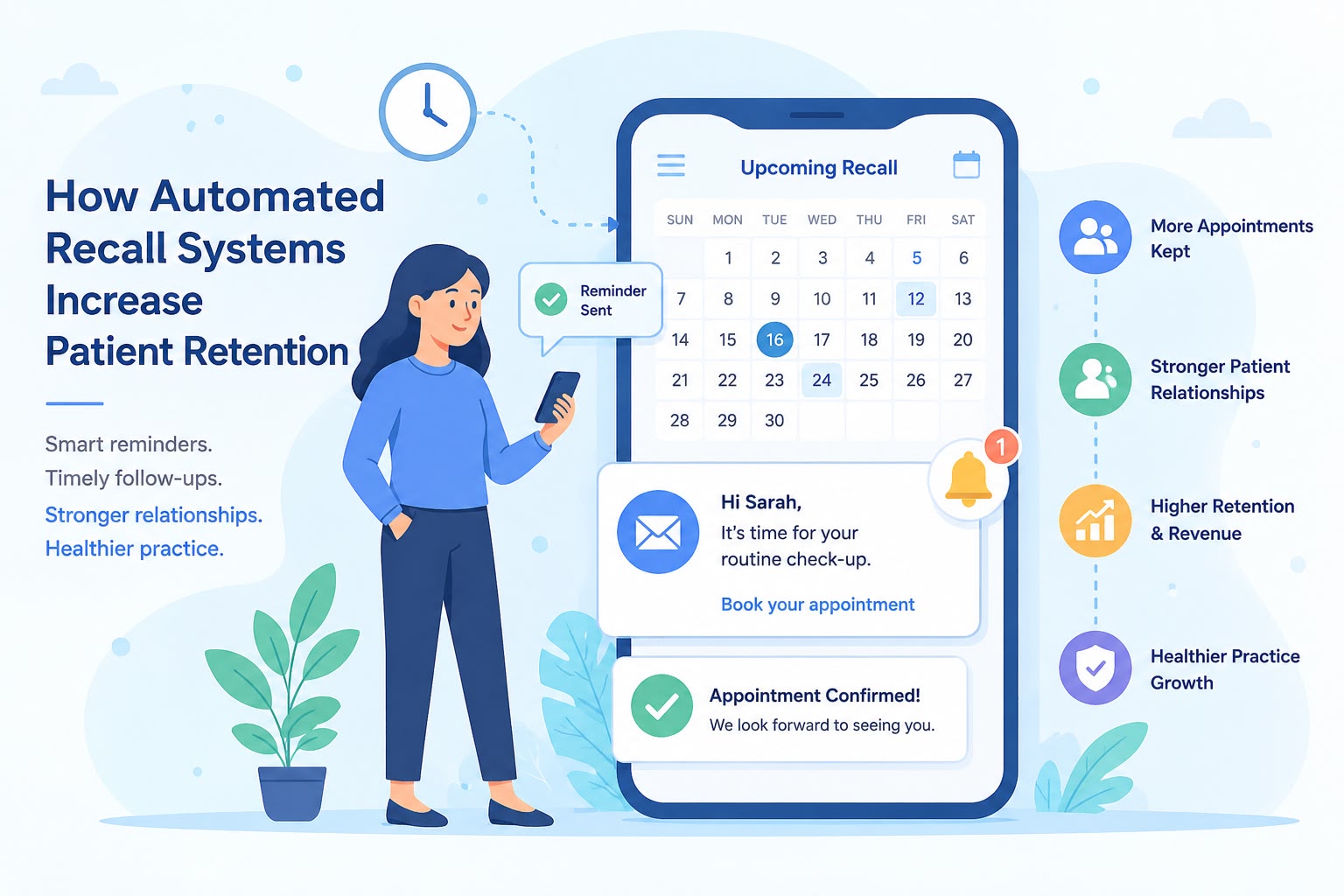
Hi Sarah, you're due for your next cleaning. Would you like us to find an appointment for you next week?
Or:
Hi Maya, it has been about six weeks since your last colour appointment with Laura. Would you like to see her available times for next week?
These messages work because the customer immediately understands why the business is contacting them.
The message feels like a reminder based on a real relationship rather than a random promotion.
Six Attempts Matter More Than Two
Many customers who eventually respond are reached only after several attempts, not after the first or second message where most businesses tend to stop.
That does not mean every customer should automatically receive six identical messages.
It means the customer follow-up system should be capable of continuing when the situation still makes sense. Each touchpoint should be properly spaced, relevant to the previous conversation, and adjusted based on whether the customer opened, replied, booked, declined, or ignored the message.
None of this requires unusual charisma.
It requires a system that remembers what the customer forgot to do.
Why This Matters More for Appointment-Based Businesses
For a clinic, salon, spa, or any business built around people returning for appointments, follow-up is not simply chasing another sale.
It is recall.
The patient who was due for a cleaning six weeks ago may not have decided to leave the practice. They may simply have forgotten to schedule before work, family, and everyday life got in the way.
The client who loved their previous salon appointment but never rebooked may not have chosen a competitor. They may have been lost to a gap in the calendar where a timely reminder should have been.
The same is true for a spa client whose package is about to expire, a physiotherapy patient who has not completed their treatment plan, or a med spa customer who is approaching the expected time for another treatment.
These customers already know the business. Many already trust the provider and understand the value of the service.
The booking is often not lost because the customer needs more convincing. It is lost because no one followed up at the right time.
The Front Desk Does Not Have a Discipline Problem
The uncomfortable truth is that most front desks are already stretched too thin to manage a six-touch, properly spaced, channel-varied customer follow-up sequence for every person who becomes due, overdue, inactive, or interested in a service.
The team is answering phones, checking customers in, rescheduling appointments, responding to questions, processing payments, handling insurance, managing providers, and solving problems that appear throughout the day.
Even when the front desk knows follow-up matters, it is usually the first task to be delayed when something more urgent appears.
That is not a discipline problem.
It is a bandwidth problem.
A manual customer follow-up process depends on someone remembering who needs to be contacted, when the previous message was sent, what the customer was contacted about, whether they replied, and when the next attempt should happen.
As the client list grows, that system becomes increasingly difficult to maintain.
Every Unanswered Message Is Not a Rejection
One of the most damaging assumptions a business can make is that silence means no.
A customer may have opened the message while they were at work. They may have intended to check their calendar later. They may have been driving, handling their children, or waiting to confirm something with another person.
By the time they are free to respond, the message has moved lower in their inbox and the intention has disappeared.
A thoughtful follow-up gives them another opportunity to take action.
The message should not pressure them or repeat the exact same language. It should gently reopen the conversation and make the next step easier.
For example:
Hi Sarah, just following up about your cleaning reminder. We have a few appointments available next week. Is there a day that usually works best for you?
The message acknowledges the previous contact, adds useful information, and gives the customer a simple question to answer.
Follow-Up Should Make Booking Easier
A good customer follow-up should not only remind someone that they need an appointment.
It should reduce the effort required to book one.
Messages such as “Call us when you are ready” place the responsibility back on the customer. The customer still has to remember, find the number, call during business hours, explain what they need, and compare available times.
A better message moves the booking forward:
You're due for your next cleaning. Would mornings or afternoons work better for you?
Or:
We have an opening this Thursday at 2 PM. Would you like it? If that time does not work, reply with a better day and we can find another option.
The customer does not need to begin the process from the beginning. They only need to answer one simple question.
That is the difference between sending a reminder and helping someone complete a booking.
The Best Follow-Up Knows When to Stop
Being dangerously good at customer follow-ups also means knowing when not to send another message.
A responsible follow-up system should stop or pause when the customer:
- Books an appointment
- Replies to the conversation
- Says they are not interested
- Asks to be contacted later
- Opts out of messaging
- Recently completed the service
- Already has a future appointment
- Reaches the business's communication limit
The system should also avoid sending separate messages for every reason a customer qualifies.
A client who is due for a service and also matches an available appointment should not receive one recall reminder followed by another message about the opening.
The better approach is to combine both reasons into one useful message:
Hi Sarah, you're due for your cleaning, and we have an opening this Wednesday at 10 AM. Would you like this time? If Wednesday does not work, reply with a better day and we can help find another appointment.
This allows the business to fill immediate capacity while still helping the customer book another date if the offered appointment does not work.
Build a System That Remembers What People Forget
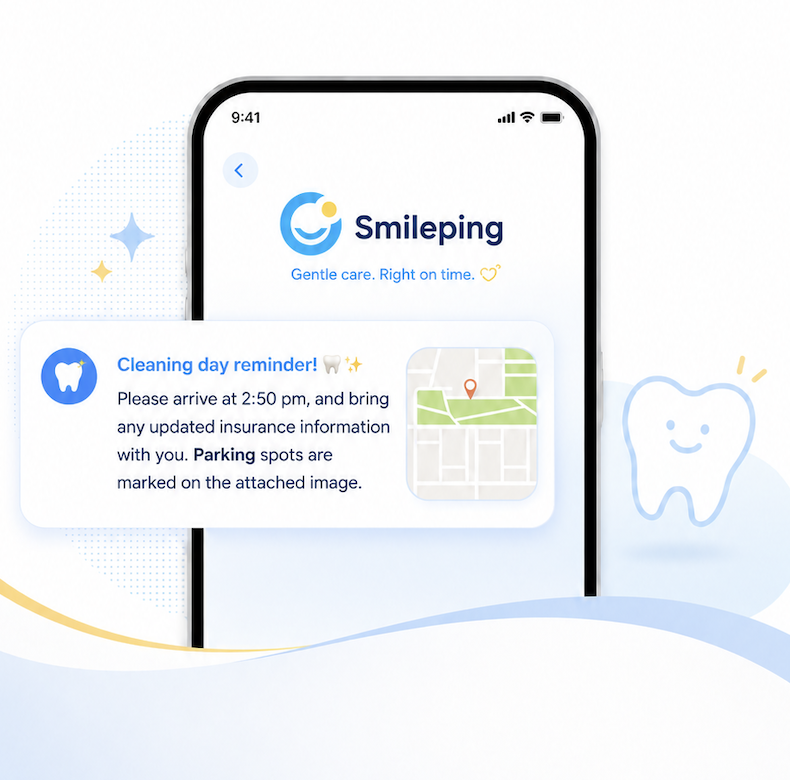
That is the exact gap SmilePing was built to close: automated, well-timed recall and customer follow-up messages that continue after the first or second attempt without requiring someone on the team to remember every next step.
SmilePing can help appointment-based businesses identify clients who are due, overdue, inactive, or waiting to complete a booking decision.
It can then coordinate the next message based on the reason for contacting the customer, the previous communication history, the available appointments, and the action most likely to lead to a booking.
The goal is not to send more messages.
The goal is to send fewer wasted messages and create more useful conversations.
A strong customer follow-up system should know:
- Who needs to be contacted
- Why they need to be contacted
- When the next message should be sent
- Which channel should be used
- What the customer has already received
- Whether a suitable appointment is available
- Whether the customer has replied or booked
- When the front desk should take over
- When communication should stop
Once those decisions are handled by a system, the front desk no longer has to rely entirely on memory.
The Business That Keeps Showing Up Wins
Most businesses do not need to become more aggressive.
They need to become more consistent.
The business that responds while the customer's interest is still active has an advantage. The business that remembers when someone is due has an advantage. The business that follows up after a missed appointment, unfinished inquiry, or unanswered treatment plan has an advantage.
Being dangerously good at customer follow-ups is not a personality trait.
It is a system.
Build the system, and the business that keeps showing up—at the right time, with the right message, and without becoming annoying—ends up being the one that wins.